
Most british style leaders agree a flawless fit is the heart of modern menswear. Over sixty-six percent of people feel more confident when their clothing fits perfectly, proving why precision tailoring matters. As UK professionals seek standout silhouettes and comfort, understanding fit goes beyond numbers and trends. This guide breaks down the essentials of cut, fabric, and body shape to help you choose premium menswear that flatters, feels right, and stands out during seasonal sales.
Table of Contents
- Defining Fit In Contemporary Menswear
- Main Fit Types And Their Distinctions
- Fit’s Impact On Style, Comfort, And Confidence
- How Fabric, Cut And Body Shape Interact
- Common Fit Mistakes And How To Avoid Them
Key Takeaways
| Point | Details |
|---|---|
| Understanding Fit is Essential | Fit involves garment design, body shape, and personal style, impacting comfort and aesthetic appeal. |
| Choose the Right Fit Type | Select from a spectrum of fit types—skinny, slim, regular, tapered, and loose—based on body shape and comfort. |
| The Importance of Movement in Fit | Assess clothing fit by moving and stretching to ensure both elegance and functional comfort. |
| Avoid Common Fit Mistakes | Focus on personal body shapes rather than standard sizes to avoid ill-fitting garments. |
Defining Fit in Contemporary Menswear
In contemporary menswear, fit represents far more than a simple measurement—it’s a complex interaction between garment design, body shape, and personal style. Industry fit practices reveal that achieving an exceptional fit requires nuanced understanding of design, manufacturing techniques, and individual body proportions.
Fit fundamentally describes how a garment conforms to an individual’s physique, creating a silhouette that enhances both comfort and aesthetic appeal. Modern menswear embraces varying fit approaches—from slim and tailored to relaxed and contemporary—each designed to complement different body types and personal preferences. Contemporary menswear standards emphasise that fit is not just about size, but about how clothing interacts with an individual’s unique physical characteristics.
Precision in fit involves multiple considerations: shoulder width, sleeve length, chest room, waist tapering, and overall garment proportion. Professional menswear designers meticulously calculate these elements, understanding that even millimetres can dramatically transform a garment’s appearance and feel. A well-fitted jacket, for instance, should allow natural movement while maintaining a clean, structured outline that flatters the wearer’s physique.
Pro tip: When assessing fit, always move and stretch in the garment to ensure it provides both aesthetic elegance and functional comfort.
Main Fit Types and Their Distinctions
Menswear fit types represent a complex spectrum of design approaches, each serving distinct aesthetic and functional purposes. Smart trouser fit guides reveal several key categories that define contemporary menswear styling, ranging from ultra-slim silhouettes to relaxed, comfortable cuts.
The primary fit types in modern menswear include skinny, slim, regular, straight, tapered, and loose fits. Each type offers unique characteristics that cater to different body shapes and personal style preferences. Skinny fits provide a tight, contemporary profile that hugs body contours, ideal for slender physiques and fashion-forward individuals. Slim fits offer a slightly more relaxed approach, providing definition without excessive tightness, making them versatile for various body types and occasions.
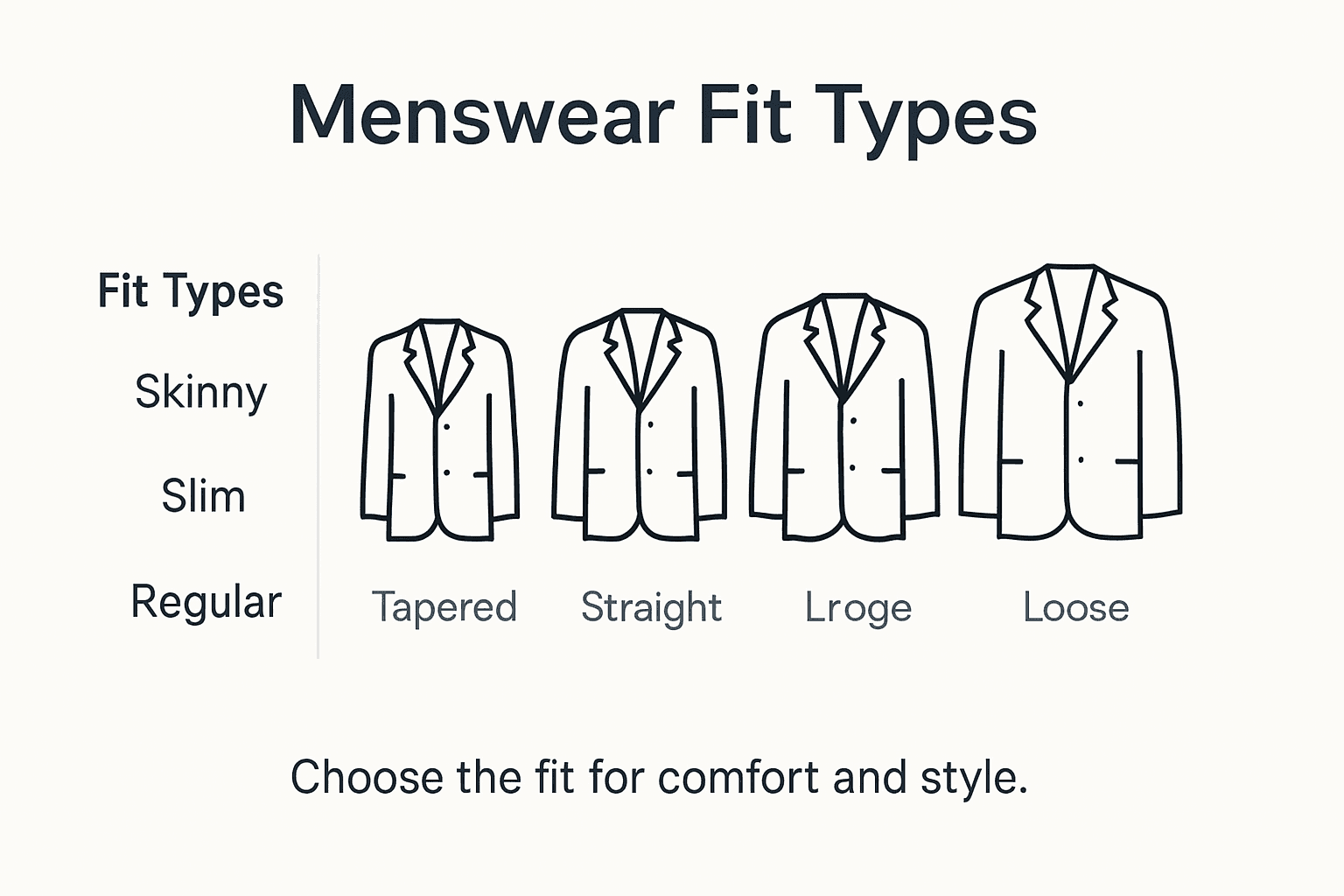
Regular and straight fits represent more traditional silhouettes, offering broader room through the leg and torso. These cuts prioritise comfort and movement, making them excellent choices for professional environments and casual settings alike. Tapered fits provide a modern compromise, featuring a narrower leg opening that creates a streamlined appearance while maintaining comfort through the thigh and hip regions. Loose fits have gained popularity in recent years, reflecting contemporary streetwear trends and offering maximum mobility and comfort.
Here is a comparison of main menswear fit types and their ideal wearer profiles:
| Fit Type | Silhouette | Best Suited For | Style Note |
|---|---|---|---|
| Skinny | Very close-fitting | Slender physiques | Fashion-forward, bold statements |
| Slim | Tailored, close | Athletic, slim builds | Versatile for many occasions |
| Regular | Roomy, traditional | Most body shapes | Classic look, everyday comfort |
| Straight | Consistent width, loose | Average builds | Professional, timeless appeal |
| Tapered | Narrows at ankle | Muscular or athletic | Modern silhouette, easy movement |
| Loose | Oversized, boxy | Large frames, all | Streetwear, maximum comfort |
Pro tip: When selecting a fit type, consider not just your body shape, but also the specific garment’s intended use and your personal comfort level.
Fit’s Impact on Style, Comfort, and Confidence
Research on clothing psychology demonstrates that fit transcends mere physical dimensions, representing a profound intersection between personal style, psychological well-being, and self-expression. An overwhelming sixty-six percent of individuals consider clothing fit the most critical factor in determining personal confidence, highlighting the transformative power of well-designed garments.
The relationship between fit, comfort, and confidence is intricate and multifaceted. Comprehensive garment research reveals that proper fit directly influences tactile comfort and movement, creating a sense of ease that radiates through an individual’s demeanour. When clothing moves seamlessly with the body, it becomes an extension of personal identity, allowing wearers to navigate social and professional environments with enhanced self-assurance.

Beyond physical comfort, well-fitted clothing communicates intentionality and self-awareness. A perfectly tailored jacket or precisely cut trousers signal attention to detail and personal pride. This subtle yet powerful communication occurs through minute adjustments in shoulder width, sleeve length, and overall silhouette—each element contributing to a holistic impression of competence and style. The psychological boost derived from wearing clothing that fits impeccably can transform an individual’s perception of themselves and others’ perceptions of them.
Pro tip: Invest time in understanding your body’s unique proportions and prioritise tailoring over off-the-rack purchases to maximise both comfort and confidence.
How Fabric, Cut and Body Shape Interact
Advanced menswear research reveals the intricate dance between fabric properties, garment cut, and individual body shape as a sophisticated design challenge. The interaction is far more complex than simply selecting a standard size, involving nuanced considerations of fabric behaviour, stretch, drape, and how these elements harmonise with unique physical proportions.
Fabric composition plays a crucial role in determining how a garment will ultimately fit and move. Different textiles—from structured wools to fluid cottons and stretchy synthetic blends—respond distinctly to body contours. A lightweight merino wool, for instance, will drape differently on a muscular frame compared to a lean physique, creating subtle variations in silhouette and comfort. The fabric’s inherent properties of stretch, weight, and texture directly influence how it interacts with body movements and shape, making material selection paramount in achieving an optimal fit.
Cut and body shape create a dynamic relationship where geometric precision meets individual anatomy. Designers must consider not just overall dimensions, but the specific ways fabric will behave across different body types. Shoulder width, chest circumference, arm length, and torso proportion all contribute to how a garment will ultimately look and feel. Some cuts work harmoniously with certain body shapes, creating visual balance and enhancing natural proportions, while others might create unwanted tension or loose, unflattering areas.
Pro tip: When shopping for clothing, always perform a range of movement tests—stretch, bend, and sit—to assess how the fabric and cut interact with your unique body shape.
Common Fit Mistakes and How to Avoid Them
Industry fit research reveals systematic challenges in menswear fitting, exposing common mistakes that compromise both style and comfort. The most prevalent errors stem from a fundamental misunderstanding of individual body proportions and a one-size-fits-all approach to garment selection.
One critical mistake is selecting clothing based solely on numerical size rather than understanding personal body shape. Shoulder width, sleeve length, and torso proportions vary dramatically between individuals, making standardised sizing inherently problematic. Men often choose garments that technically fit in circumference but fail to accommodate specific body characteristics. This results in shirts with shoulders that bunch or droop, trousers that create unflattering lines, and jackets that restrict movement.
Another significant error involves neglecting fabric behaviour and garment construction. Different body types require nuanced fabric selections and cut variations. A muscular physique might require additional room across the shoulders, while a leaner frame benefits from more tapered cuts. Ignoring these subtle distinctions leads to garments that appear ill-fitting, uncomfortable, and aesthetically compromised. Professional tailors understand that fit is not about strict measurements, but about understanding how fabric, cut, and individual anatomy interact dynamically.
Below is a summary of common fit mistakes and their practical solutions:
| Common Mistake | Consequence | Solution Recommendation |
|---|---|---|
| Relying solely on size | Poor overall appearance | Assess body shape and posture |
| Ignoring shoulder width | Ill-fitting silhouette | Fit shoulders first |
| Neglecting fabric behaviour | Restricted movement | Choose suitable textile blend |
| Avoiding tailoring | Unflattering finish | Invest in professional adjustment |
Pro tip: Always try on clothing and perform a range of movements—reaching, sitting, walking—to assess true fit beyond static mirror evaluations.
Discover the Perfect Fit with Vellure Homme for Style and Confidence
The article highlights the crucial challenge of finding menswear that combines exceptional fit with comfort and style. If you have struggled with ill-fitting garments that restrict movement or fail to flatter your physique it is time to explore options that prioritise precise tailoring, fabric behaviour, and body shape compatibility. Vellure Homme understands that fit is not just about size but about creating a silhouette that conveys confidence and elegance through thoughtful cut and quality materials.
Experience the difference that well-fitted clothing brings to your style and confidence with Vellure Homme’s curated collections of premium sweaters, jackets, and overcoats. Our range is designed to accommodate various fits from tailored to relaxed ensuring you find pieces that complement your unique proportions. Shop today at Vellure Homme and enjoy up to 50% off new arrivals and seasonal favourites. Elevate your wardrobe with clothing that moves as you do and makes an instant impression. Take the step to invest in fit that transforms your everyday look now.
Frequently Asked Questions
What is the importance of fit in menswear?
Fit is crucial in menswear as it enhances both style and comfort, allowing garments to conform to an individual’s physique and personal style, ultimately boosting confidence and self-expression.
How can I determine the best fit type for my body shape?
To determine the best fit type, consider your body shape and the specific garment’s intended use. Remember the different fit categories—skinny, slim, regular, tapered, and loose—and choose one that complements your unique proportions while ensuring comfort.
What common mistakes should I avoid when selecting menswear?
Common mistakes include relying solely on size numbers, ignoring the importance of shoulder width, neglecting fabric behaviour, and avoiding tailored adjustments. Understanding your body shape and fabric types can significantly improve your fit.
How does fabric choice affect the fit of menswear?
Fabric choice greatly affects fit as different materials behave differently on various body types. For instance, structured wools may maintain shape better than stretchy fabrics, which can influence the overall silhouette and comfort of a garment.
Recommended
- What Is Contemporary Menswear and Why It Matters – Vellure Homme
- Ethan Slim Fit Cotton-Blend Trousers for Men – Modern Tailored Style W – Vellure Homme
- Jordan Men’s Slim Fit Suit Trousers with Pleat – Business Style – Vellure Homme
- Jordan Men’s Slim Fit Suit Trousers with Pleat – Business Style – Vellure Homme
- Men’s Definitive Guide to Wearing Waist Packs - Part 2 – Troop London