

Over half of fashion-conscious young professionals in the UK admit their winter wardrobe lacks true versatility in battling the unpredictable British chill. With ever-shifting trends and a growing awareness of sustainable shopping, building a wardrobe that looks sharp and feels effortless matters more than ever. This curated checklist guides you in selecting premium men’s winter clothing that meets the demands of modern British style while ensuring long-lasting comfort and function.
Table of Contents
- Step 1: Assess Your Current Wardrobe
- Step 2: Identify Key Winter Essentials
- Step 3: Select Premium Quality Pieces
- Step 4: Incorporate Contemporary Trends
- Step 5: Verify Fit And Versatility
- Step 6: Finalise Your Seasonal Wardrobe
Quick Summary
| Key Point | Explanation |
|---|---|
| 1. Assess your current wardrobe | Evaluate what you own by categorising items into keep, repair, and donate to enhance sustainability and versatility. |
| 2. Identify key winter essentials | Curate a practical winter collection focusing on warmth and versatility through layered clothing strategies. |
| 3. Select premium quality pieces | Invest in well-crafted items that blend aesthetic appeal with durability and responsible manufacturing. |
| 4. Incorporate contemporary trends | Integrate subtle trends that enhance your style without compromising versatility or wardrobe cohesion. |
| 5. Verify fit and versatility | Ensure clothing fits well and adapts across various occasions, allowing for freedom of movement and style. |
Step 1: Assess Your Current Wardrobe
Understanding and evaluating your existing clothing collection is the foundational step in building a modern men’s wardrobe. By carefully examining what you already own, you can make strategic decisions about what to keep, repair, or replace to create a more sustainable and versatile clothing ensemble.
Start by emptying your entire wardrobe and creating three distinct piles: keep, repair, and donate. For each item, ask yourself critical questions about its fit, condition, and versatility. The Design Museum’s Future Observatory highlights that modern fashion consciousness requires understanding the lifecycle and ecological impact of your clothing. Check each garment for signs of wear such as loose threads, faded colours, or stretched fabric. Assess whether an item truly serves multiple purposes in your wardrobe or if it sits unused for months. The UK Fashion and Textile Association recommends evaluating clothing based on quality, functionality, and overall utility.
Here is a summary of typical wardrobe item lifecycles and their impact:
| Wardrobe Item | Average Useful Years | Ecological Impact |
|---|---|---|
| Wool Jumper | 5-7 | Biodegradable, durable |
| Cotton Shirt | 2-4 | Moderate, recyclable |
| Denim Jeans | 4-6 | High water usage |
| Synthetic Jacket | 3-5 | Non-biodegradable |
| Cashmere Scarf | 6-10 | Natural, minimal |
While sorting, be brutally honest about what you actually wear. Many men hold onto clothes from past seasons or nostalgic moments, but a streamlined wardrobe is more practical. Focus on pieces that fit well, complement your current style, and can be mixed and matched easily. Consider the versatility of each item and its potential to create multiple outfit combinations.
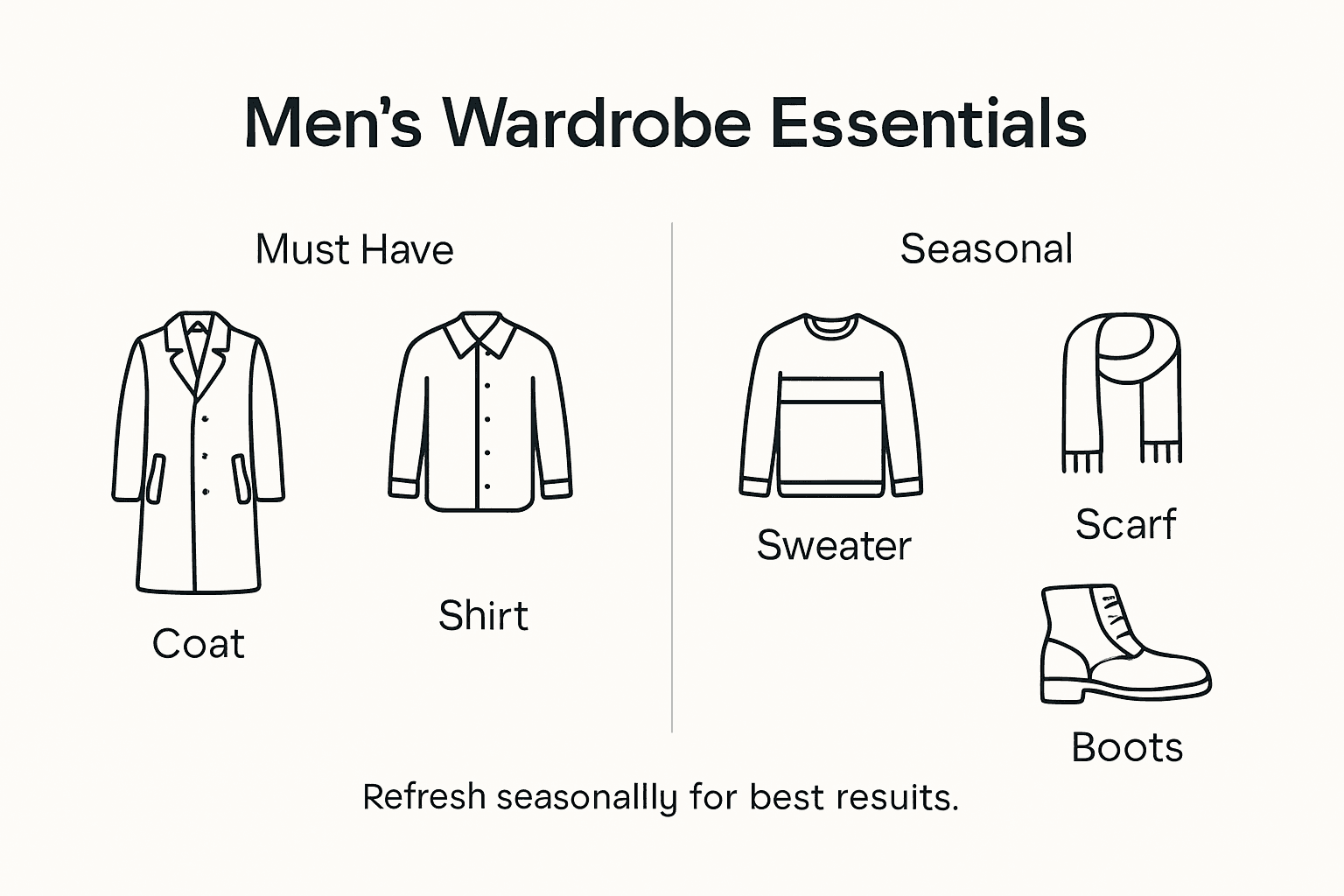
Expert Advice: Take photographs of your current wardrobe to help visualise potential outfit combinations and identify gaps in your clothing collection.
Step 2: Identify Key Winter Essentials
Building a practical winter wardrobe requires strategic selection of pieces that offer warmth, versatility, and protection against the unpredictable British winter. Your goal is to curate a collection of clothing that keeps you comfortable while maintaining a stylish appearance across various settings.
The UK government guidance on winter clothing emphasises the importance of layered dressing. Start with a strong foundation of thermal underlayers made from wool or high-performance synthetic materials. These form the first defence against cold temperatures and help regulate body heat. Next, focus on versatile mid layers like merino wool sweaters or lightweight insulated jackets that can be easily added or removed depending on temperature changes.
Your outer layer should be a high-quality waterproof coat or jacket that protects against rain and wind. Winter clothing construction techniques recommend selecting garments with wind resistant fabrics and sealed seams. Essential accessories include a warm beanie or wool hat, insulated gloves, and a substantial scarf that can be styled multiple ways. Prioritise items that can be mixed and matched to create different looks while providing maximum functionality.

The following table highlights the differences between core winter layers:
| Layer Type | Key Function | Most Recommended Fabric |
|---|---|---|
| Base Layer | Moisture regulation | Merino wool |
| Mid Layer | Heat retention | Fleece or wool blend |
| Outer Layer | Weather protection | Waterproof or waxed cotton |
| Accessories | Added warmth | Wool or insulated synthetics |
Expert Advice: Invest in neutral coloured winter essentials that can be easily coordinated with multiple outfits to maximise versatility and reduce overall clothing expenditure.
Step 3: Select Premium Quality Pieces
Curating a wardrobe of premium quality clothing requires a strategic approach that balances aesthetic appeal with long term functionality. Your goal is to invest in pieces that not only look sophisticated but also demonstrate exceptional durability and craftsmanship.
The UK Fashion and Textile Association highlights the importance of selecting garments that represent sustainable and responsible manufacturing. Focus on materials with superior construction such as merino wool, high grade cotton, and cashmere blends that offer both comfort and longevity. Examine fabric weight, stitching quality, and finishing details carefully. Look for reinforced seams, well constructed buttonholes, and consistent colour integrity as indicators of premium craftsmanship.
When evaluating potential purchases, ethical consumer guidelines recommend considering the broader impact of your clothing choices. Prioritise brands that provide transparency about material sourcing, manufacturing processes, and labour conditions. This approach ensures you are not just buying clothing but investing in pieces that align with responsible consumption principles while maintaining exceptional quality standards.
Expert Advice: Always try garments on and move around to assess true comfort and fit before making a final purchasing decision.
Step 4: Incorporate Contemporary Trends
Navigating the world of contemporary menswear requires a nuanced approach that balances personal style with current fashion movements. Your objective is to integrate trend forward elements strategically without compromising your individual aesthetic or wardrobe versatility.
UK fashion and textile industry reports demonstrate how modern menswear trends emerge from a sophisticated interplay between traditional craftsmanship and innovative design. Start by identifying subtle trend elements that complement your existing wardrobe such as updated silhouettes in classic pieces like tailored overcoats or contemporary colour palettes in knitwear. Focus on adaptable trends that offer longevity rather than fleeting seasonal statements.
Government trade statistics reveal the dynamic nature of fashion consumption, suggesting that trend incorporation should be thoughtful and selective. Pay attention to emerging colour trends, fabric innovations, and subtle design details that can refresh your look without requiring a complete wardrobe overhaul. Look for pieces that feature modern cuts such as slightly relaxed tailoring, interesting textural elements, or unexpected fabric combinations that add visual interest while maintaining a timeless foundation.
Expert Advice: Select trend elements that resonate with your personal style and can be easily integrated into multiple outfits rather than chasing every passing fashion moment.
Step 5: Verify Fit and Versatility
Evaluating the fit and versatility of clothing pieces is crucial in creating a functional and stylish wardrobe. Your goal is to ensure each garment not only looks good but also adapts seamlessly across different settings and occasions.
UK fashion and textile industry insights emphasise the critical importance of selecting clothing that complements your body shape and offers maximum wearability. When trying on garments, perform a series of physical movements to assess true comfort and range of motion. Check how the fabric drapes across your shoulders, how sleeves move when you raise your arms, and whether trousers allow comfortable walking without restricting movement. Look for pieces that provide enough room for layering without appearing bulky or oversized.
Government manufacturing standards suggest paying close attention to garment construction and adaptability. Seek out items that can transition between formal and casual settings with minimal styling adjustments. A well fitted blazer that pairs equally well with jeans or tailored trousers represents an ideal versatile piece. Consider colour palettes and neutral tones that enable multiple outfit combinations, maximising the potential of each individual clothing item in your wardrobe.
Expert Advice: Always move extensively in garments before purchasing to ensure genuine comfort and unrestricted movement.
Step 6: Finalise Your Seasonal Wardrobe
Compiling a strategic seasonal wardrobe requires thoughtful planning and consideration of both functional requirements and personal style preferences. Your objective is to create a versatile clothing collection that adapts seamlessly to changing weather conditions and social environments.
UK seasonal weather forecasting provides critical insights into preparing your wardrobe for temperature variations and potential climate challenges. Begin by reviewing your existing clothing inventory and identifying gaps that need addressing for the upcoming season. Consider layering pieces that offer flexibility such as lightweight merino wool jumpers, water resistant outerwear, and adaptable base layers that can be easily added or removed depending on temperature shifts.
The UK Fashion and Textile Association recommends a strategic approach to seasonal wardrobe curation that balances practicality with personal aesthetics. Focus on selecting core foundation items that can be mixed and matched across multiple outfits. Prioritise neutral colour palettes and versatile pieces that transition smoothly between different social contexts. Assess each potential addition to your wardrobe by its ability to integrate with existing garments and provide multiple styling options.
Expert Advice: Photograph your completed seasonal wardrobe to visualise potential outfit combinations and identify any remaining stylistic or functional gaps.
Elevate Your Modern Wardrobe with Premium Essentials from Vellure Homme
The challenge of building a versatile and stylish men’s wardrobe lies in selecting quality pieces that combine fit, functionality, and timeless appeal, just as the article “Essential Men’s Clothing Checklist for the Modern Wardrobe” highlights. Whether you are assessing your current collection or aiming to incorporate contemporary trends, finding premium sweaters, jackets, and overcoats that maximise comfort and adaptability is crucial – especially for tackling the unpredictable British winter.
Discover how Vellure Homme can help you overcome common wardrobe frustrations like ill-fitting garments or lack of versatility. Our carefully curated range blends modern trends with enduring design, allowing you to invest in pieces that offer supreme comfort and style season after season. Start refining your wardrobe today by exploring our seasonal collections, where up to 50% off new arrivals awaits the discerning shopper. Visit Vellure Homme now to experience a seamless shopping journey that puts premium men’s clothing within easy reach.
Frequently Asked Questions
How can I assess my current wardrobe effectively?
Begin by emptying your wardrobe and sorting items into three piles: keep, repair, and donate. Ask yourself about the fit, condition, and versatility of each item to determine what to retain.
What are the key winter essentials I should include in my modern wardrobe?
Focus on layering with thermal underlayers, versatile mid-layers, and a high-quality waterproof outer layer. Include accessories such as a beanie, insulated gloves, and a scarf for added warmth.
How do I select premium quality clothing for my wardrobe?
Look for materials such as merino wool and high-grade cotton that offer durability and comfort. Prioritise garments with reinforced seams and quality stitching to ensure longevity.
What contemporary trends should I incorporate into my wardrobe?
Select subtle trend elements that enhance your personal style, such as updated silhouettes or modern colour palettes. Focus on long-lasting trends rather than fleeting fashion statements for better wardrobe longevity.
How can I verify the fit and versatility of clothing pieces?
Try on garments and perform movements to assess their comfort and range of motion. Look for items that effortlessly transition between formal and casual settings to maximise wearability.
What steps should I take to finalise my seasonal wardrobe?
Review your current clothing inventory and identify any gaps that need addressing for the upcoming season. Prioritise versatile core items that can be mixed and matched, ensuring they fit well with the existing pieces in your wardrobe.
Recommended
- What Is Contemporary Menswear and Why It Matters – Vellure Homme
- 7 Essentials for a Complete Men’s Winter Wardrobe Checklist – Vellure Homme
- Ethan Slim Fit Cotton-Blend Trousers for Men – Modern Tailored Style W – Vellure Homme
- Edward Men’s Tailored Business Shirt – Classic Cotton Pinstripe – Vellure Homme
- Men’s Fashion Pieces Every Man Should Own - STOMART.CO.UK
- Christian Men’s Lifestyle Fashion: Complete Guide – Walk In His Footsteps