

Most men underestimate how much fabric choice shapes their wardrobe, yet over 60 percent of British shoppers say material quality drives their buying decisions. In a world where looking sharp matters for both casual weekends and professional meetings, understanding fabric impact can set you apart. Whether you want comfort, versatility, or style that fits every season, this guide helps you select fabrics that match your personal taste and lifestyle demands.
Table of Contents
- Defining Fabric’s Impact In Men’s Fashion
- Key Types Of Fabric For Men’s Clothing
- How Fabric Influences Comfort And Style
- Fabric Performance Through The Seasons
- Sustainability And Responsible Fabric Choices
Key Takeaways
| Point | Details |
|---|---|
| Fabric is Essential for Men’s Fashion | The choice of fabric significantly influences comfort, performance, and personal style in men’s clothing. |
| Different Fabrics Have Unique Properties | Understanding the characteristics of fabrics like cotton, wool, and synthetics can enhance your wardrobe and its versatility. |
| Seasonal Adaptability is Crucial | Selecting appropriate fabrics for different seasons ensures comfort and style, making smart layering essential. |
| Sustainability Should Be Prioritised | Opting for sustainable fabric choices can reduce your environmental impact and support responsible fashion practices. |
Defining Fabric’s Impact in Men’s Fashion
Men’s fashion goes far beyond mere clothing selection—it represents a complex interplay between material, design, and personal expression. Fabric serves as the foundational element that transforms basic garments into statements of individual style, performance, and sophistication. Fabric manipulation fundamentally shapes how designers translate creative concepts into wearable fashion, determining not just aesthetic appeal but functional qualities.
The significance of fabric extends well beyond surface-level considerations. Different textile materials carry inherent characteristics that profoundly influence how a garment drapes, moves, and communicates personal identity. Lightweight merino wool, for instance, offers temperature regulation and elegant flow, while heavyweight cotton provides structured comfort. These material properties determine how clothing interacts with the wearer’s body, creating a dynamic relationship between fabric, design, and individual physique.
Contemporary menswear increasingly recognises fabric as a critical design language. Modern fashion studies demonstrate that textile choices are intrinsically linked to cultural expression and sensory experience, transforming clothing from mere coverings into complex communication tools. Designers now carefully select fabrics that not only look appealing but also convey specific emotional and functional narratives—whether signalling professionalism through crisp linens or suggesting relaxed sophistication with soft jersey materials.
Pro Tip: When building a versatile wardrobe, prioritise fabrics with multiple performance characteristics that can transition seamlessly between professional and casual settings.
Key Types of Fabric for Men’s Clothing
Fabric selection represents a critical decision in men’s clothing, with each material offering unique characteristics that define comfort, performance, and style. Contemporary clothing materials span a diverse range of natural and synthetic fibres, each engineered to meet specific functional and aesthetic requirements, enabling men to curate wardrobes that reflect both personal taste and practical needs.
Natural fibres remain foundational in men’s fashion. Cotton offers breathability and versatility, making it ideal for casual t-shirts and summer wear. Wool provides exceptional temperature regulation, with merino and lambswool variants delivering lightweight warmth perfect for contemporary menswear collections. Linen emerges as a premium summer fabric, known for its crisp texture and exceptional cooling properties, while silk adds luxurious softness to formal shirts and accessories.
Synthetic and blended fabrics have revolutionised men’s clothing, introducing advanced performance characteristics. Polyester and nylon provide durability and wrinkle resistance, making them popular in athletic and travel wear. Technical blends combining natural and synthetic fibres create smart textiles that offer enhanced moisture-wicking, stretch, and temperature control. The UK textile industry continues to be at the forefront of developing innovative fabric technologies, pushing the boundaries of what men’s clothing can achieve in terms of comfort and functionality.
Here’s a summary of common men’s fashion fabrics and their key properties:
| Fabric Type | Primary Advantage | Typical Uses |
|---|---|---|
| Cotton | Breathable and soft | T-shirts, casual shirts |
| Wool | Excellent insulation | Jumpers, suits |
| Linen | Cooling in hot weather | Summer suits, shirts |
| Silk | Luxurious hand feel | Ties, dress shirts |
| Polyester | Durable, resists wrinkles | Sportswear, outerwear |
| Nylon | Lightweight, quick-dry | Activewear, jackets |
Pro Tip: Invest in versatile fabric blends that offer multiple performance characteristics, allowing your clothing to adapt seamlessly across different environments and activities.
How Fabric Influences Comfort and Style
Comfort in men’s clothing transcends simple physical sensation, representing a complex interaction between textile properties and human physiology. Advanced fabric comfort measurements reveal intricate relationships between material characteristics and wearer experience, demonstrating that true comfort emerges from sophisticated interactions between fiber composition, garment construction, and individual body dynamics.
Thermal regulation stands as a critical aspect of fabric performance. Different materials respond uniquely to body temperature and environmental conditions. Wool, for instance, provides exceptional insulation by trapping air molecules, while lightweight cotton allows rapid moisture evaporation. Sophisticated comfort indices evaluate multiple physiological parameters, including tactile sensitivity, thermal exchange, and pressure distribution, ensuring that modern menswear goes beyond mere aesthetic considerations.

Psychological comfort plays an equally significant role in fabric selection. The sensory experience of wearing a particular material influences confidence and self-perception. Smooth silk might evoke elegance during formal events, while rugged denim communicates casual authenticity. Textile technologies now enable fabrics that adapt to multiple environmental contexts, creating versatile garments that seamlessly transition between professional and leisure settings.
Pro Tip: Select fabrics that offer adaptive properties, prioritising materials with moisture-wicking, temperature-regulating, and breathable characteristics for maximum comfort and style flexibility.
Fabric Performance Through the Seasons
Seasonal adaptability represents a crucial consideration in men’s fashion, with fabric performance dramatically influencing comfort and functionality throughout the year. Comprehensive analysis of clothing materials reveals intricate relationships between textile properties and environmental conditions, demonstrating how strategic fabric selection can transform a wardrobe’s versatility.
Winter demands exceptional thermal management, with fabrics like merino wool and technical synthetic blends providing critical insulation. Strategic fabric modifications enable enhanced performance across changing environmental conditions, allowing men to maintain optimal body temperature through intelligent material choices. Layering becomes key, with base layers offering moisture-wicking properties and outer layers providing wind and water resistance.
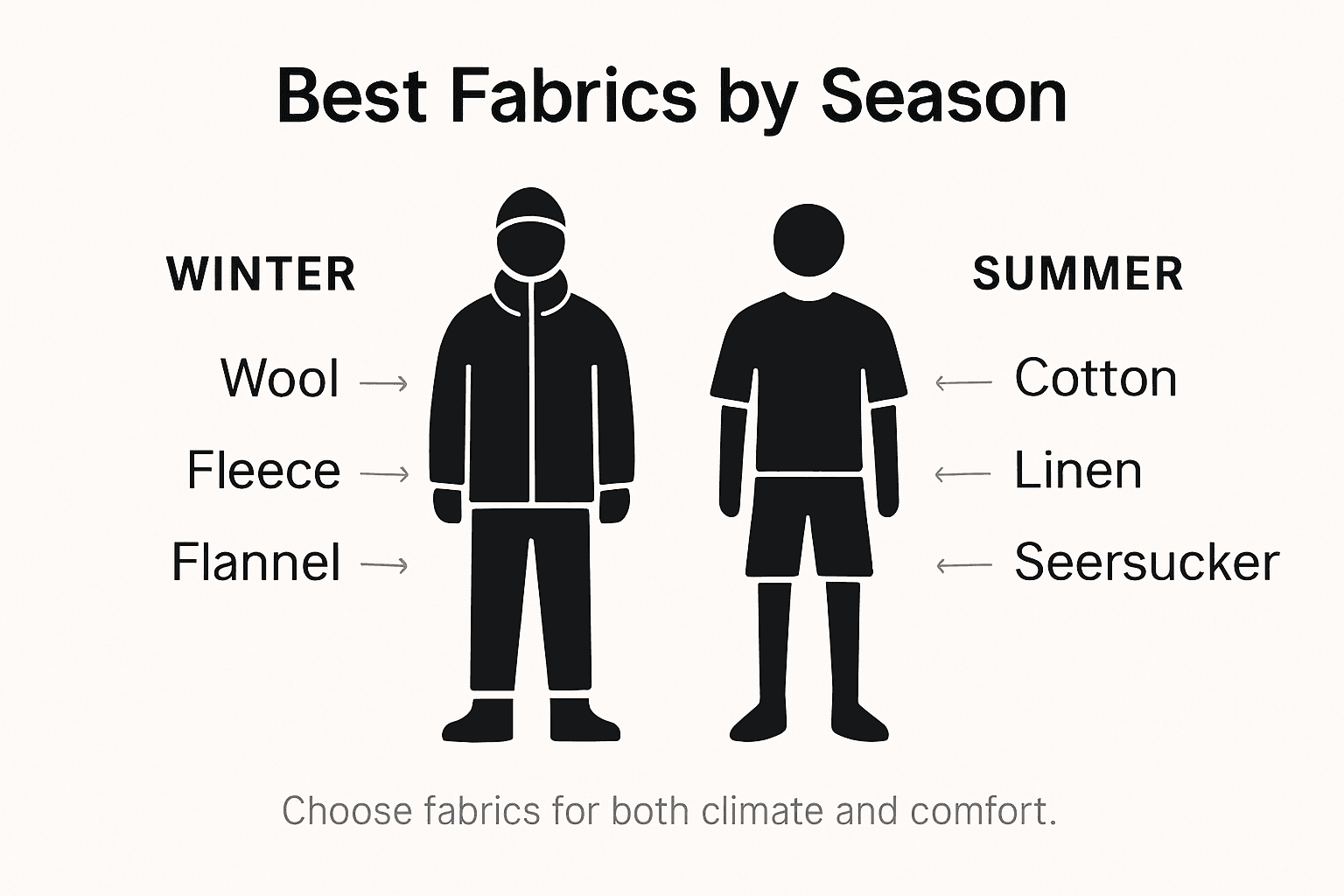
Summer fabrics require entirely different characteristics, prioritising breathability and lightweight construction. Cotton, linen, and advanced synthetic meshes create garments that facilitate air circulation and rapid moisture evaporation. Winter wardrobe essentials demonstrate how fabric technology has evolved to provide multi-functional clothing that adapts seamlessly across temperature ranges, ensuring men can maintain style and comfort regardless of seasonal challenges.
The following table illustrates how different fabric types perform in each season:
| Season | Best Fabrics | Main Benefit |
|---|---|---|
| Winter | Merino, technical blends | Warmth, moisture control |
| Summer | Cotton, linen, mesh | Breathability, cooling |
| Spring | Lightweight wool, blends | Versatility, comfort |
| Autumn | Thick cotton, wool | Warmth, structure |
Pro Tip: Invest in versatile fabric pieces that offer layering potential, enabling smooth transitions between seasonal temperature variations and maintaining both comfort and style.
Sustainability and Responsible Fabric Choices
Sustainable fashion represents a critical evolution in men’s clothing, transforming fabric choices from aesthetic decisions to meaningful environmental statements. Modern fabric sustainability integrates complex considerations around ecological impact, ethical production, and long-term environmental responsibility, challenging consumers to think beyond immediate style preferences.
Natural fibres offer compelling sustainability pathways. Organic cotton, hemp, and linen emerge as environmentally responsible alternatives to conventional textiles. Detailed ethical assessments reveal nuanced approaches to selecting fabrics with minimal environmental footprint, highlighting how conscious material selection can dramatically reduce fashion’s ecological burden. Recycled polyester, made from reclaimed plastic waste, represents another innovative approach to reducing textile industry environmental impact.
The sustainability conversation extends beyond material selection to encompass entire production lifecycles. Responsible brands now prioritise transparent supply chains, fair labour practices, and circular design principles. Advanced textile technologies enable fabric recycling, closed-loop manufacturing, and reduced water consumption, transforming sustainability from a niche concept to a fundamental industry requirement. Winter wardrobe essentials increasingly reflect these evolving standards, demonstrating how style and environmental consciousness can coexist.
Pro Tip: Prioritise versatile, high-quality fabric pieces that offer longevity and multi-season wear, reducing overall consumption and supporting sustainable fashion practices.
Discover Fabrics That Define Your Style and Comfort
Choosing the right fabric is essential for every modern man who values style, comfort, and versatility in his wardrobe. This article highlights the crucial role fabric plays in influencing how clothes look, feel, and perform throughout the seasons. If you have ever struggled to find clothing that balances temperature regulation, breathability, and visual appeal, Vellure Homme offers a carefully curated range designed exactly for these needs. From premium sweaters crafted in fine wool to smart outerwear built with innovative fabric blends, our selection helps you embrace the power of fabric to express your personality and stay comfortable all day.
Elevate your wardrobe now with our exclusive collections at Vellure Homme. Explore how our expertly chosen materials can provide the layering potential and performance characteristics discussed in the article. Whether updating your winter essentials or searching for versatile pieces that transition through seasons with ease, each item on our site reflects the modern man’s desire for quality and functionality. Don’t miss the opportunity to benefit from seasonal promotions and secure clothing that perfectly aligns with your fashion and comfort goals.
Frequently Asked Questions
How does fabric choice impact the comfort of men’s clothing?
Fabric choice affects the comfort of men’s clothing through characteristics like breathability, temperature regulation, and moisture-wicking properties. Materials like merino wool offer insulation, while cotton provides breathability, ensuring comfort across different temperatures and activities.
What are the benefits of using natural fibres in men’s fashion?
Natural fibres, such as cotton, wool, and linen, offer distinct advantages including breathability, durability, and moisture management. These materials also tend to be more environmentally friendly compared to synthetic fibres, contributing to sustainable fashion choices.
How can I choose the right fabric for different seasons?
To choose the right fabric for different seasons, consider how each material performs in specific conditions. For winter, opt for merino wool for warmth; for summer, choose lightweight cotton or linen for breathability. Layering with blends during spring and autumn can enhance versatility and comfort.
What role does sustainability play in fabric choices for men’s fashion?
Sustainability plays an essential role in fabric choices by encouraging the use of eco-friendly materials, such as organic cotton and recycled polyester. Responsible brands prioritise ethical production and transparency, making it crucial for consumers to select fabrics that align with sustainable practices.
Recommended
- What Is Contemporary Menswear and Why It Matters – Vellure Homme
- Adrian Tailored Cotton Linen Pants for Men – Slim Fit Trousers – Vellure Homme
- Adrian Tailored Cotton Linen Pants for Men – Slim Fit Trousers – Vellure Homme
- Adrian Tailored Cotton Linen Pants for Men – Slim Fit Trousers – Vellure Homme
- What Is Unisex Streetwear? Complete Style Overview – ChillStitchApparel